American Painted Furniture: The Folk Art Tradition at Round Top
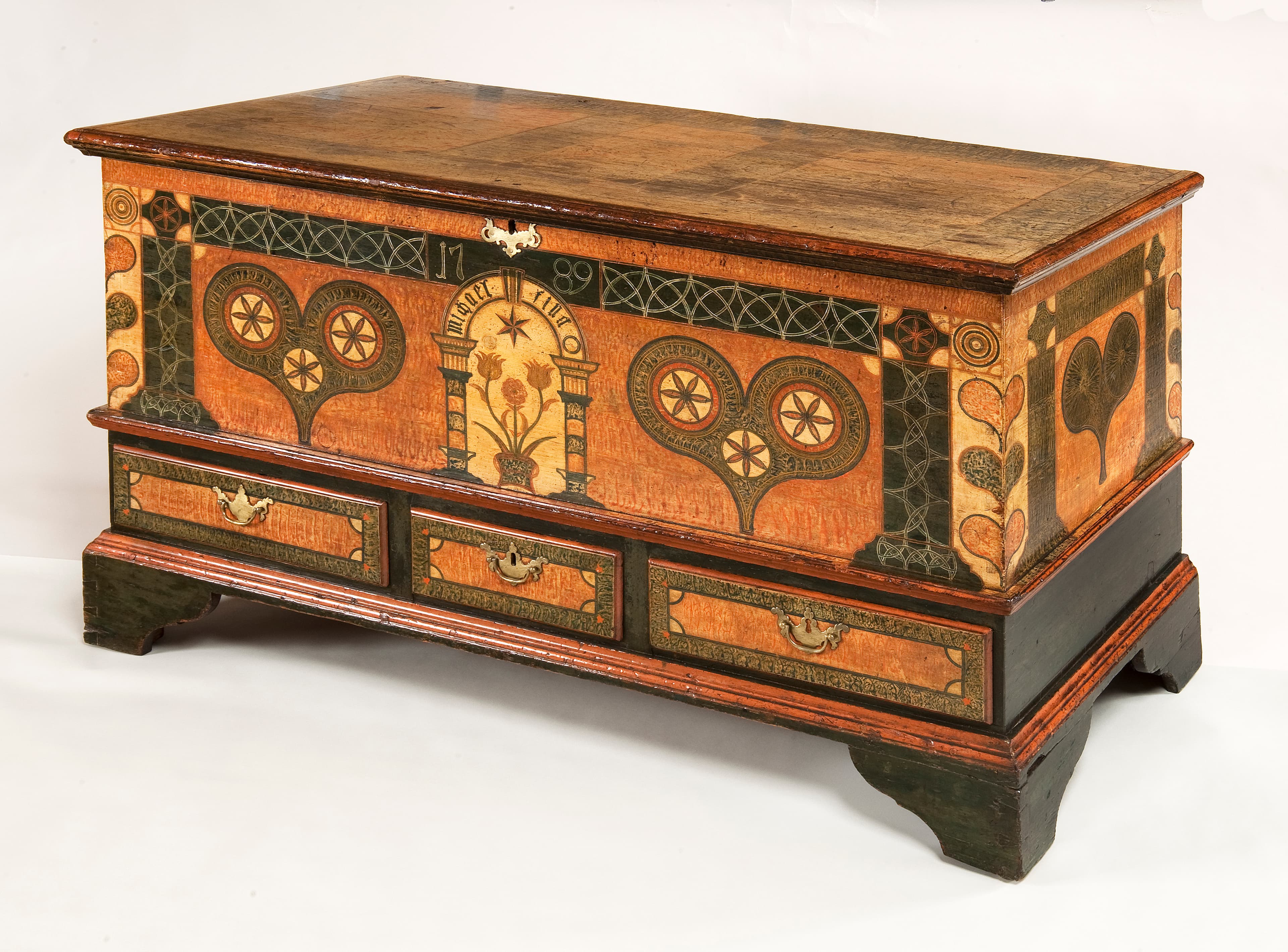
Some of the most striking pieces at Round Top aren't the grand European antiques. They're the painted ones. The worn blue chest tucked under a tent at Marburger. The red cupboard with a small bird painted on its door. The table that's clearly lived a hundred years of family life and still has the scuffs to show for it.
This is American painted furniture, and once you start noticing it, you'll see it everywhere in Round Top.
What Painted Furniture Actually Is
American painted furniture is utilitarian furniture decorated by ordinary people. Not professional artists. Not court craftsmen. Farmers. Farmers' wives. Village carpenters who wanted to bring a little beauty into a plain wooden home.
That's part of what makes it so charming. The brushwork isn't always perfect. The birds don't look like real birds. The flowers are stylized and sometimes abstract. But the pieces carry the hand of the person who made them, and you can feel it.
The Pennsylvania Dutch Tradition
The most iconic American painted furniture tradition comes from the Pennsylvania Dutch, dating primarily to the late 17th and 18th centuries. German-speaking immigrants brought central European furniture-making habits with them, and most of what they built was simple and utilitarian. Tables, chairs, chests, cupboards. Practical pieces for a practical life.
But in more formal spaces, they painted. And the color palette they used still defines the look today:
- Milk blue, soft and chalky
- Barn red, warm and earthy
- Mustard yellow
- Sage and deeper greens
- Mottled browns that imitated more expensive wood grain
The motifs were folk motifs. Birds inside arched panels. Angels. Flowers. Leaves and vines. Abstract plant forms. Pure geometric patterns when the painter wasn't feeling representational.
Why Panel Construction Matters
Almost all Pennsylvania Dutch furniture used panel construction, and this isn't just a building detail. It's a design decision that shaped the whole aesthetic.
Panels gave the painter a natural canvas. Each framed rectangle could hold its own motif. One panel might have a bird. The one beside it, an angel. The one below, a stylized tulip. The piece became a gallery of small paintings wrapped around a functional object.
The Schrank
If you see one piece that tells the whole story, it's the schrank (sometimes spelled shrank). This was the largest and most prestigious piece of furniture in a Pennsylvania Dutch home. A massive wardrobe, split into three sections, painted and decorated like a statement.
You would never see a schrank-style painted wardrobe on a true English Chippendale piece. That was the whole point. The schrank was German tradition on American soil, green or blue or red, covered in abstract, almost bone-like patterns across the panels. And often, painted right across the front, the family name.
That little detail says everything about how Pennsylvania Dutch families felt about their furniture. It wasn't just storage. It was identity.
Why Paint at All?
Plain wood is beautiful, but it's also plain. In a simple home with simple plaster walls and simple floors, painted furniture was how you brought personality, color, and craft into the room. It was accessible decoration. You didn't need a silver service or a French commode. You needed a chest, and you could paint it yourself, and it would be yours in a way that bought furniture never is.
It's the same reason collectors love these pieces now. They feel personal because they are personal.
The Role of Milk Paint
Most of what was used was milk paint, the traditional paint medium made from milk protein, lime, and pigment. Milk paint matters because of how it ages. It dries flat and chalky, never glossy. Over time it crazes in tiny irregular cracks. It chips at contact points, showing the wood underneath. It mutes and softens.
That look you love on an old blanket chest, that perfectly worn, slightly chalky, slightly chipped, slightly faded paint, is milk paint living its full life. You can't really fake it. You can try, but the eye knows.
Simplified Chippendale and Other Forms
Pennsylvania Dutch makers also produced their own take on Chippendale, often called simplified Chippendale. They kept the cornice, the columns, the bank of drawers, the bracket legs. But the lines were cleaner, the carving was restrained, and then they painted it. Which, again, would have scandalized a London cabinetmaker.
They also made their own version of the Windsor chair, with spindle backs and saddle seats that are still wildly popular today. Ladder back chairs with horizontal slats and woven seats. Sawbuck tables with X-form legs you can assemble without a single nail or screw.
Why You See So Much of It at Round Top
Round Top is a show full of Americana and primitive dealers. Any field or tent that trades in American country furniture is going to have painted pieces. You'll find them at Marburger, along the Warrenton stretch, in the smaller fields where the primitive dealers cluster, and tucked into barns throughout the shows.
Some pieces are signed. Most aren't. Some have documented provenance. Most have lived anonymous lives. But they're out there, waiting to be found.
This Is the Fifth Guide in Our Antique Collecting Series
If you're building a collected, layered home, painted furniture is one of the foundations. We've covered ironstone, flow blue, French farmhouse pottery, and antique silver in earlier guides, and painted American pieces are what those collections sit on and inside of.
Next in this series, we'll look at the specific painted furniture pieces to know. The blanket chests, tavern tables, cupboards, and chairs you'll actually see at Round Top, and why each one is worth collecting.
Plan your next hunting trip at Round Top Finder, where you can browse vendors by category and find the painted furniture dealers before you ever leave home.
Never Miss a Show
Get show dates, insider guides, and featured vendors delivered to your inbox. Monthly, never spammy.
Not ready to subscribe? Grab the free printable cheat sheet — no email required.