Antique Lighting at Round Top: What to Look For (And What It Costs to Rewire)
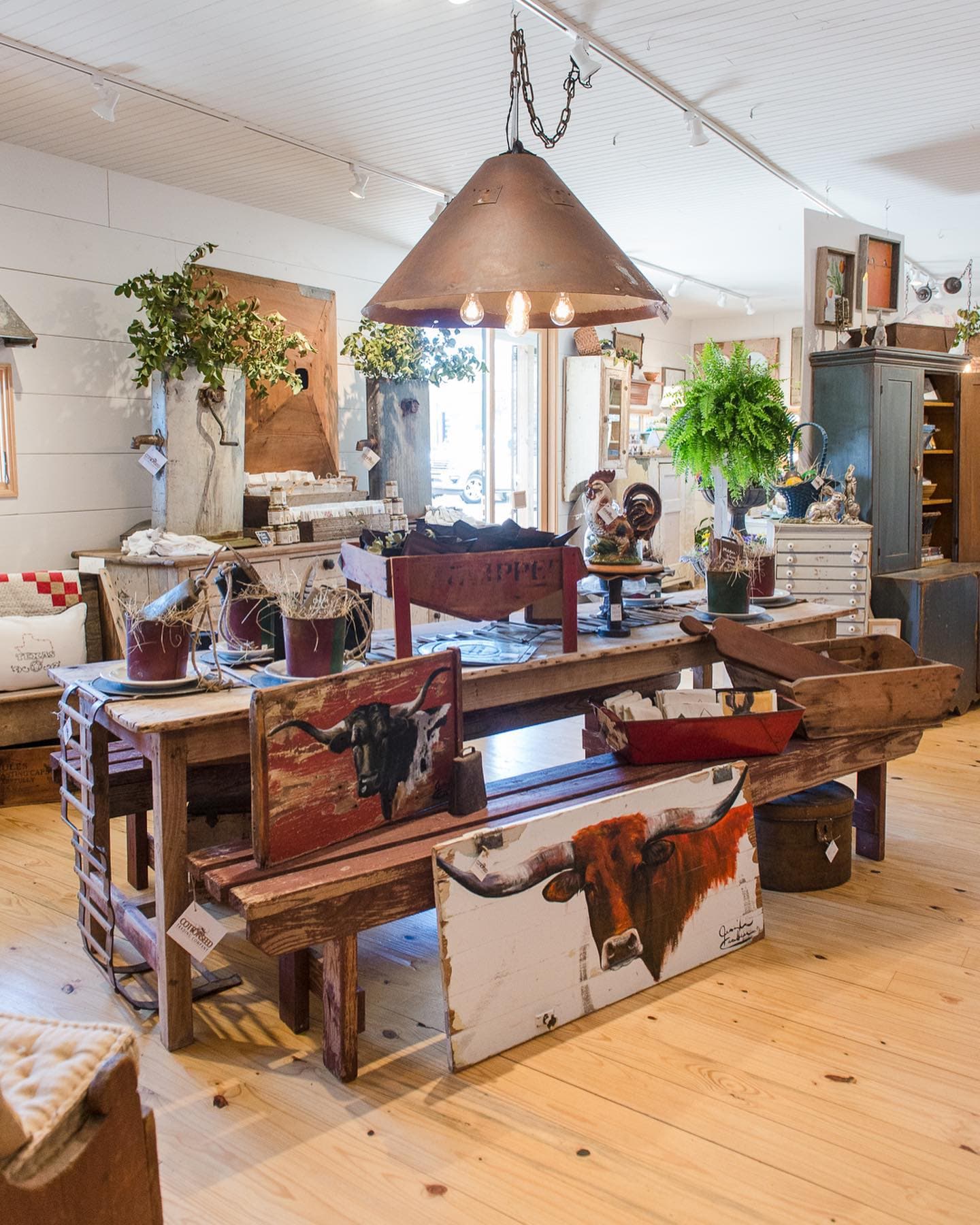
Antique Lighting at Round Top: What to Look For (And What It Costs to Rewire)
Lighting is one of the single best purchases you can make at Round Top. A room can have great furniture, beautiful art, and perfect paint colors, and still feel flat if the lighting is generic. Swap a builder-grade flush mount for an antique iron chandelier and the entire room shifts. It is the fastest, most dramatic transformation available in interior design, and Round Top has one of the best selections of antique lighting in the country.
Every show season, thousands of chandeliers, sconces, table lamps, lanterns, and pendants pass through Round Top's venues. Crystal chandeliers imported from France. Wrought iron fixtures from Italian churches. Industrial brass pendants from English factories. Mid-century ceramic table lamps from American studios. The range is vast, the quality is often extraordinary, and the prices — once you factor in what comparable fixtures cost new — are genuinely good.
The catch is that antique lighting requires more evaluation than most categories. You are buying something that was built to run on electricity (or gas) in a different era, under different safety standards, using materials and wiring that may be 80 to 150 years old. The good news is that the evaluation is straightforward, and the most common issue — outdated wiring — is easily and affordably fixed.
Types of Antique Lighting at Round Top
Chandeliers
The flagship category. Round Top has chandeliers in every style, size, and material.
Crystal chandeliers are the classic: metal frames (usually brass or iron) hung with cut crystal or glass drops, prisms, and chains. French and Czech crystal chandeliers from the 18th and 19th centuries are the most sought-after. The crystal catches and refracts light, creating the sparkle and movement that makes crystal chandeliers timeless.
Iron chandeliers are the workhorse of farmhouse and rustic design. Hand-forged iron fixtures with candle-style lights, sometimes with simple scrollwork or twisted elements. Hugely popular at Round Top and available at every price point. Italian, Spanish, and French iron chandeliers are common imports.
Brass chandeliers range from formal (Georgian-style with multiple arms and candle cups) to industrial (simple utilitarian fixtures from factories and institutions). The brass itself can be polished to a mirror shine or left with its natural patina — a decision with significant aesthetic impact.
Wood chandeliers are a growing category. Carved wood fixtures, sometimes painted or gilded, with an organic quality that metal fixtures lack. Wood bead chandeliers (often from India or Africa) have become popular in coastal and bohemian interiors.
Sconces
Wall-mounted fixtures, sold in pairs. Crystal sconces, iron sconces, brass sconces with candle arms, and Art Deco glass sconces are all common at Round Top. Sconces are one of the best values in antique lighting because they have less competition than chandeliers — most buyers focus on the centerpiece fixture and overlook the walls.
Table and Floor Lamps
Ceramic lamps, brass lamps, glass lamps (including art glass from the early 20th century), iron lamps, and wood lamps. The body of the lamp is the antique element; shades are almost always replaced. Budget for a new shade when buying an antique lamp base.
Pendants and Lanterns
Hanging fixtures designed for single bulbs or candles. Glass globes, metal lanterns, industrial cage pendants, and schoolhouse-style fixtures. These are often the most affordable entry point into antique lighting.
The Rewiring Question
Here is the single most important thing to understand about buying antique lighting: almost all of it needs to be rewired before you use it, and that is completely fine.
Wiring has a useful life. The fabric-covered wiring used in fixtures from the early 1900s through the 1960s deteriorates over time — the insulation cracks, exposes bare wire, and becomes a fire hazard. Even if an antique fixture "works" when tested, the wiring may be unsafe for permanent installation.
Professional rewiring is neither difficult nor expensive. A qualified electrician or lighting restorer can rewire most fixtures in one to three hours.
Rewiring Cost Reference
| Fixture Type | Typical Rewiring Cost |
|---|---|
| Simple table lamp | $30 - $75 |
| Single pendant/lantern | $50 - $100 |
| Sconce (each) | $40 - $80 |
| Chandelier, 4-6 arms | $100 - $200 |
| Chandelier, 8-12 arms | $150 - $300 |
| Chandelier, large/complex | $250 - $500 |
Factor rewiring into your purchase price from the start. If a six-arm chandelier is priced at $400, your actual cost is $400 plus $150 for rewiring, or $550 total. Compare that to what a comparable new fixture costs and you will almost always find that the antique is the better deal and the better-looking option.
Some vendors at Round Top sell fixtures that have already been rewired. Ask. If a chandelier has new wiring with UL-listed components, that is a significant value-add and justifies a somewhat higher price.
How to Evaluate Antique Lighting
Check the Arms
On chandeliers and sconces with multiple arms, examine each arm individually. Are they all original to the fixture, or have some been replaced? Original arms match in style, patina, and proportion. Replacement arms may differ slightly in curve, thickness, or finish. A fixture with all original arms is worth more than one with replacements, but replaced arms are not a dealbreaker if the match is good.
Count the Crystals
On crystal chandeliers, missing crystals are common. Crystals fall off during transport, storage, and display. Look at the fixture from multiple angles and check for empty hooks, bare pins, or asymmetric areas where drops are clearly missing.
Missing crystals are replaceable. Crystal chandelier parts are available from specialty suppliers and from vendors at Round Top itself. The cost ranges from $2-10 per drop for standard crystal pieces to $20-50 for large or unusual shapes. A chandelier missing 10-15 percent of its crystals is a normal purchase — budget for replacement parts.
A chandelier missing 50 percent or more of its crystals is a restoration project. This can still be worthwhile if the frame is exceptional, but the cost of sourcing matching crystals adds up quickly.
Inspect Glass and Crystal for Damage
Chips, cracks, and cloudiness in glass shades, crystal drops, and glass bobeches (the cup-shaped pieces around each light) all reduce value. Run your fingers around the rims of glass elements — chips you cannot see are often detectable by touch. Hold crystal up to light to check for cracks.
Test the Mechanism
On chandeliers and sconces, check that all the moving parts work. Do the arms sit level? Do candle cups (the sockets that hold the bulbs) sit upright? Does the chain hang straight? Is the canopy (the round plate that covers the ceiling junction box) included?
Look at the Chain and Canopy
The chain connecting a chandelier to the ceiling and the canopy covering the ceiling attachment are frequently replaced or missing. This is not a problem — chains and canopies are inexpensive and readily available. But if they are missing, factor in $15-40 for replacements.
Crystal Chandeliers: What to Know
Crystal quality varies enormously and drives the price of crystal chandeliers.
Lead crystal (also called full lead crystal) contains lead oxide, which gives it exceptional clarity, weight, and light refraction. It sparkles intensely and produces rainbow light patterns on nearby walls. Lead crystal chandeliers from France (Baccarat, Saint-Louis) and the Czech Republic (Bohemia) are at the top of the market.
Glass crystal (also called pressed glass or molded glass) is ordinary glass shaped to look like cut crystal. It is lighter, less sparkly, and duller than lead crystal. Many affordable chandeliers use glass crystal, and from a distance it looks fine. Up close and in good light, the difference is visible.
How to tell the difference. Hold a crystal drop up to light. Lead crystal throws rainbow prisms on nearby surfaces. Glass crystal does not, or does so faintly. Lead crystal also feels heavier than glass crystal of the same size, and it makes a clear, resonant ring when gently flicked with a fingernail (glass makes a thud).
Types of Crystal Elements
Pendalogue drops are the tear-shaped or almond-shaped hanging crystals that form the "rain" at the bottom of a chandelier. These are the signature elements and the most commonly missing or damaged pieces.
Bead chains are strands of small round or octagonal crystal beads draped between arms or around the frame. They add sparkle and movement.
Prisms are flat, multi-sided crystal pieces that catch and split light. They hang from the arms or frame of the chandelier.
Bobeches are the cup-shaped elements around each candle socket. They were originally designed to catch dripping wax. On crystal chandeliers, they are often cut glass or crystal.
Iron Chandeliers: What to Know
Iron is the dominant material for antique lighting at Round Top, driven by the enduring popularity of farmhouse, rustic, and Mediterranean interiors.
Check for Rust
Surface rust on iron is cosmetic and does not affect the fixture's structural integrity or usability. It adds character and many designers prefer it. Deep rust that has eaten through the metal — creating thin spots, holes, or flaking sections — is a structural problem. Press on rusted areas. If the metal flexes or crumbles, the rust has gone too deep.
Check the Welds
Look at where arms connect to the body of the chandelier. Original forge welds on genuinely old iron fixtures show irregular, hammered joints. Modern stick welds (from MIG or TIG welding) show a uniform bead of filler metal. Modern welds on an "antique" fixture indicate either a repair or a reproduction.
Some reproductions are not deceptions — many vendors honestly sell new iron chandeliers made in the traditional style by contemporary blacksmiths. These can be excellent purchases. Just make sure the price reflects what you are buying.
Iron Chandelier Price Reference
| Type | Typical RT Price Range |
|---|---|
| Small iron chandelier (3-4 lights) | $150 - $400 |
| Medium iron chandelier (6-8 lights) | $300 - $800 |
| Large iron chandelier (8-12 lights) | $500 - $2,000 |
| Oversized/dramatic iron fixture | $1,000 - $3,500 |
| Iron sconce pair | $100 - $400 |
| Iron lantern/pendant | $75 - $350 |
Brass Fixtures: To Polish or Not
This deserves its own section because it is one of the most common mistakes buyers make.
Antique brass develops a patina over time — a darker, often greenish-brown surface layer that forms from oxidation and handling. Many buyers instinctively want to polish brass to a bright, shiny finish. Many designers would tell you not to.
Polished brass looks new and modern. Patinated brass looks old and authentic. In most interiors, the patina is what gives an antique brass fixture its character and distinguishes it from a new brass fixture that costs three times as much.
Before you polish, live with the patina for a while. If you still want it polished after a month, go ahead — it is reversible (the patina will eventually return on its own). But many people who polish regret it when they see how generic the fixture looks afterward.
Gas-to-Electric Conversions
Many antique chandeliers from the late 19th century were originally designed to burn gas. When electric lighting became standard in the early 1900s, these gas fixtures were converted to electricity. This is a common and legitimate history — it does not make the fixture a fake or reduce its value. In fact, a documented gas-to-electric conversion confirms the fixture's age.
You can identify a converted gas fixture by the arms, which often curve upward (gas flames pointed up) rather than downward. Some converted fixtures have both gas and electric elements — arms pointing up for the original gas jets and arms pointing down for the added electric lights.
Overall Price Guide
| Category | Typical RT Price Range |
|---|---|
| Crystal chandelier, small/medium | $300 - $1,500 |
| Crystal chandelier, large/fine | $1,500 - $5,000+ |
| Iron chandelier | $150 - $2,000 |
| Brass chandelier | $200 - $1,500 |
| Wood chandelier | $150 - $800 |
| Sconce pair (any material) | $100 - $800 |
| Table lamp (antique base, needs shade) | $50 - $300 |
| Table lamp (complete, working) | $75 - $500 |
| Floor lamp | $100 - $500 |
| Industrial pendant | $50 - $250 |
| Lantern | $75 - $400 |
Where to Find Lighting at Round Top
The Show. The Compound is legendary for European chandeliers — this is where designers go for large, dramatic crystal and iron fixtures imported from French estates, Italian churches, and English manor houses. Marburger Farm has high-end lighting from specialist dealers. The Arbors has a mix of curated lighting at mid-range prices. If you want to see the best fixtures Round Top has to offer, start at these venues.
The Hunt. The field venues have different strengths. Iron and industrial lighting is abundant in the Warrenton fields and at Excess — practical, affordable fixtures that deliver huge design impact without high-end prices. You will also find table lamps, lanterns, and occasionally crystal chandeliers that a vendor priced low because lighting is heavy to haul and they want to move it.
The field venues are also where you find the most negotiable prices on lighting. At the end of a show week, vendors with unsold chandeliers and heavy lamps are highly motivated. A fixture priced at $500 on Tuesday may be available for $300 on Saturday.
Bring measurements for any space where you plan to install a fixture (ceiling height, room dimensions, the diameter of the space above your dining table). Bring a phone for the magnification test on crystal. And bring a willingness to factor in rewiring costs — the fixture that transforms your room is worth the additional $100-200 to make it safe and functional.
For more buying guides, venue maps, and show schedules, visit Round Top Finder.
Never Miss a Show
Get show dates, insider guides, and featured vendors delivered to your inbox. Monthly, never spammy.
Not ready to subscribe? Grab the free printable cheat sheet — no email required.