Don't Buy That Antique Chair Until You Read This: A Construction Guide
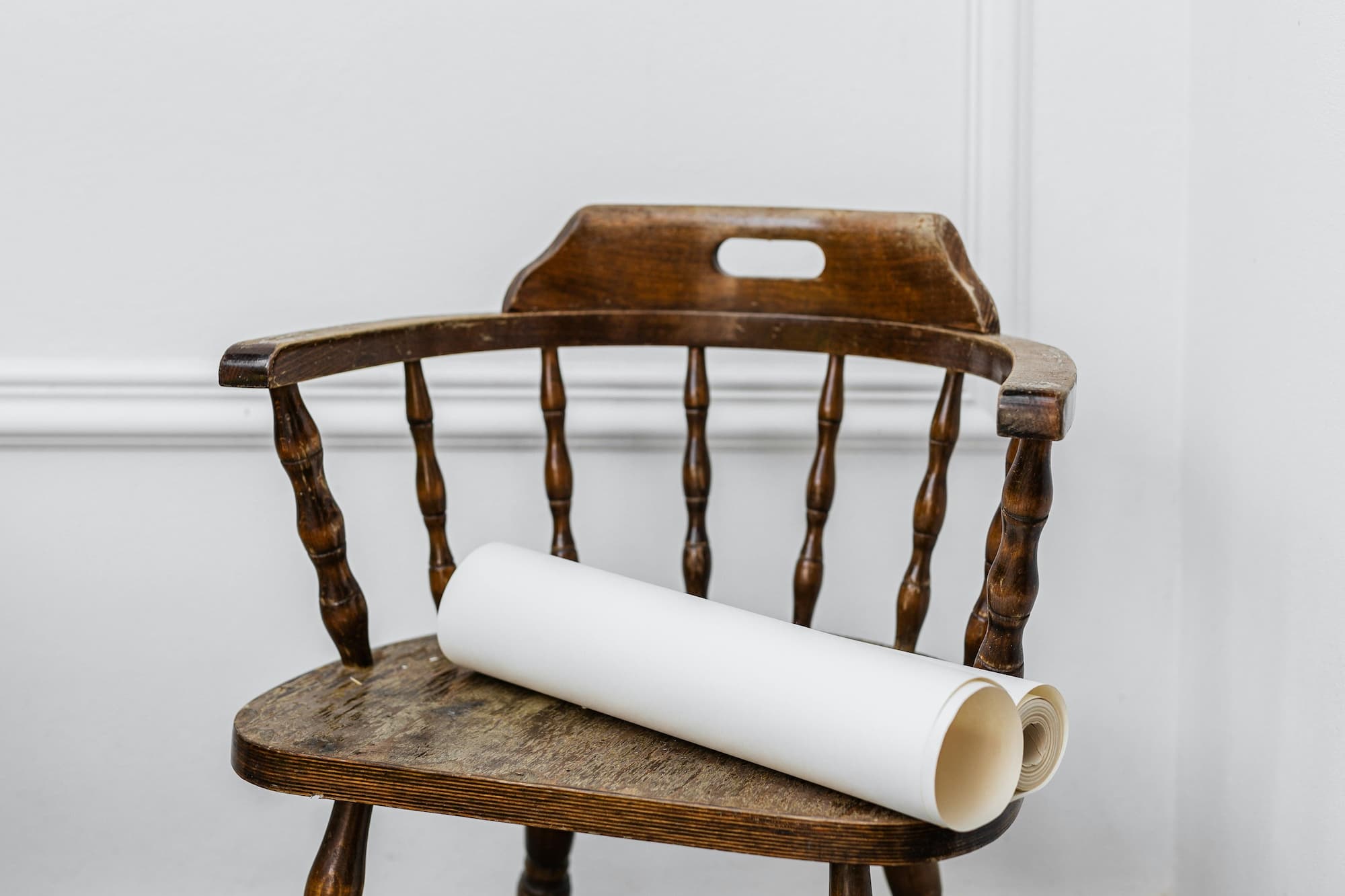
Don't Buy That Antique Chair Until You Read This: A Construction Guide
Chairs are the most structurally demanding pieces of furniture ever made. They carry dynamic loads — weight that shifts, leans, tilts — in joints that are inherently vulnerable to movement and wear. A well-built antique chair can last centuries under regular use. A poorly joined or heavily repaired one will fail within a year of bringing it home.
At Round Top, chairs are everywhere. Side chairs, armchairs, dining sets, occasional chairs, rockers. They are also the furniture category most likely to have hidden structural problems — repairs that are invisible from the outside, joints that feel solid when you squeeze them in a booth but open up under actual use.
This guide gives you the tools to evaluate any antique chair in under three minutes at a booth — and to know whether what you are looking at is worth what is being asked.
Why Chairs Fail
Understanding why chairs fail tells you exactly where to look when evaluating them.
The fundamental problem is geometry. A chair is not a box. It has angled joints connecting legs to rails, back posts to seat, stretchers to legs — and none of these angles are 90 degrees. Angled joints are mechanically weaker than square joints and more vulnerable to racking forces (the side-to-side and front-to-back stresses generated by someone actually sitting and moving in a chair).
The traditional solution is the mortise-and-tenon joint: a projecting tenon on one piece fits into a precisely cut mortise in the other, usually secured with hide glue. When all joints are tight and the glue is sound, the chair is very strong. When joints dry out, shrink, or are stressed beyond their tolerance, they open. An open joint is not just loose — it is a progressive failure. Every time someone sits in the chair, the joint opens slightly more, until the tenon is so worn and the mortise so elongated that the chair can never be reliably re-glued.
This is why the history of every chair's joints is written in the chair itself — if you know how to read it.
The Three-Minute Booth Test
Do this before you look at anything else. It will tell you more than any visual inspection.
Step 1: The Rack Test
Stand behind the chair. Place your hands on the two back posts near the seat. Gently try to rack the chair — push the left post forward while pulling the right post back, then reverse. Any movement at all in the back-to-seat joints means those joints are open or failing.
Then move to the side. Place one hand on the front leg and one on the back leg on the same side. Try to rack the chair front-to-back. Movement here indicates open joints in the side rails.
A structurally sound chair feels like a single rigid object when you try to rack it. Any independent movement between components means joints need attention.
Step 2: The Sit Test
Sit in the chair. Shift your weight side to side. Lean back against the back posts. If you hear creaking or feel any flexing, joints are moving. The creak is the sound of wood-on-wood contact in an open joint.
This is also when you will feel whether the seat is structurally sound. A seat that flexes noticeably under your weight has either a broken or weak subframe, or upholstery springs that have collapsed.
Step 3: The Visual Joint Check
Now look at every joint you can see. Examine where the legs meet the seat rail, where the back posts meet the seat, where stretchers connect to legs. You are looking for:
- Gaps at joint lines: Even hairline gaps indicate an open joint
- Discoloration around joints: Darker wood or dried glue residue at a joint line means it has been re-glued at least once
- Misalignment: A leg that is very slightly out of alignment with its original position suggests the joint failed, the piece was repaired in position, and it set slightly wrong
- Dowels or screws at joints: These are almost always repairs to joints that failed. Period chairs did not use screws at structural joints. If you see a screw at a leg-to-rail joint, someone drove it in to reinforce a failing mortise-and-tenon. It is not a permanent solution.
Joint Types by Period
Knowing what joinery you should see helps you identify what has been repaired or replaced.
Pre-Industrial (pre-1830s)
Hand-cut mortise-and-tenon joints. Slightly irregular but very precise — the two mating pieces fit each other specifically, not interchangeably. Wedged tenons common: the tenon is split and a wooden wedge driven in to spread it after assembly, creating a mechanical lock independent of the glue. These joints, when original and intact, are among the strongest furniture joints ever made.
19th Century Factory Production (1840-1900)
Machine-cut mortise-and-tenon joints become standard. More uniform, slightly less tight-fitting than hand-cut. Still the right joint for the application. Some manufacturers use dowel joints — round wooden pegs in matching holes — rather than mortise-and-tenon. Dowels are inherently less strong in chairs because they have less glue surface area and no mechanical interlocking. A Victorian chair with dowel construction is not inferior by Victorian standards, but it has less structural reserve than mortise-and-tenon.
Early 20th Century
Dowel construction becomes more common in factory production. Some manufacturers use corner blocks — square blocks of wood glued and screwed into the inside corners of the seat frame. Corner blocks add significant strength and are found on well-made chairs from this period. If you look under the seat and see intact original corner blocks, that is a quality indicator.
Repairs: What Is Acceptable vs What Is a Problem
Acceptable Repairs
Re-gluing open joints with hide glue: The correct repair for a loose mortise-and-tenon. Hide glue is reversible, which means the joint can be taken apart and re-glued again if necessary. A properly re-glued joint is nearly as strong as the original. The evidence of re-gluing (dried glue residue visible at the joint line) is not a problem — it is just history.
Replaced stretchers: Stretchers (the horizontal rungs connecting legs) break and get replaced more than any other chair component. A replaced stretcher, properly fitted and glued, restores full structural integrity. You can usually identify replacements by slightly different wood color or turning profile compared to the originals.
Reupholstered seats: Upholstery is essentially consumable — it wears out and gets replaced. Multiple rounds of reupholstery on an antique chair is normal and not a quality concern. What matters is the seat frame under the upholstery.
Replaced cane or rush seats: Same principle. The woven material wears out; replacement restores function without affecting the structural frame.
Repairs That Warrant Caution
Screws driven through joints: As noted above — a desperation repair that does not actually fix the underlying problem. The joint is still failed; the screw is just holding it together mechanically. These chairs continue to deteriorate.
Epoxy or expanding foam in joints: Visible as a grayish, hard filler material in joint gaps. Epoxy and foam are not reversible and cannot be properly re-glued over. A joint filled with epoxy is essentially frozen in place — which can work if it was done correctly and aligned properly, but prevents any future maintenance.
Replaced back posts or legs from non-matching sources: Leg replacements that do not match the originals in diameter, profile, or wood species. This indicates significant damage that required wholesale component replacement. Not automatically a dealbreaker, but value is affected.
Cracked seat frame: The wooden frame under the upholstery that the seat padding sits on. You usually cannot see this without removing the upholstery. But you can press on the seat surface and feel whether the frame is solid or has any flex. A cracked frame needs proper repair before the chair is usable.
Repairs That Are Dealbreakers
Multiple layers of repair over failing original joints: A chair that has been re-glued multiple times, then doweled, then screwed, then braced with metal brackets — this chair's joinery is exhausted. The mortises are worn beyond reliable repair. You can spend money on it and it will still not be right.
Broken back post: The vertical back posts are structural. A broken and spliced back post carries limited load. Visible splicing, metal sleeves, or obvious repairs to a back post are serious structural concerns.
Missing feet: Feet wear down and break. Completely missing feet on all four legs indicate extreme age and wear. The legs have been shortened at the base to bring them back to level, which means the chair sits lower than intended and the leg-to-rail joints may have been compromised by the shortening.
Upholstery: What to Look For
You usually cannot see the seat frame without removing upholstery, but you can get useful information:
Press the seat firmly in several spots. A solid spring base feels slightly springy but not soft or collapsing. A broken spring produces a distinctive uneven give where the spring has failed. A seat with no springs (solid wood base with padding) feels firm with very little give.
Look at the seat from the side. Original drop-in seats sit level and flush with the seat rail. A seat that tilts or is lower on one side suggests a broken or missing corner support.
Check the seat depth and height. Antique chairs were built for the body proportions of their era. Many Victorian chairs have seat heights and depths that feel slightly wrong by modern standards — shorter seat heights, shallower seats. This is not a defect but a functional consideration for daily use.
Consider reupholstery cost. If you love the chair but the upholstery is damaged, plan on $150-400 per chair for basic reupholstery at a professional shop, more for carved or complex frames. A set of six dining chairs with bad upholstery might need $1,200-2,000 in fabric and labor. Factor this into your offer.
Sets: The Special Problem
Buying a set of antique dining chairs is genuinely difficult because true matched sets of six or eight from the same original production run are rare. What you find at Round Top is more often:
True matched sets: All chairs from the same original set, same maker, same production run. Identical in profile, turning, carving, and construction. These are the most valuable and the rarest. Expect to pay a premium.
Near-matched sets: Chairs from the same maker and period that are visually compatible but not from the same original purchase. Slight differences in turning profiles, minor carving variations, slightly different patina. Common and usually fine for actual dining use.
Assembled sets: A dealer has collected four to eight similar chairs from different sources over time. They look compatible but are genuinely different pieces. Often sold honestly as "assembled" or "harlequin" sets. Worth less than matched sets but perfectly functional.
The problem with assembled sets: The chairs may have different joint conditions, different stability, different height and proportion. When you sit down to dinner with six chairs that are slightly different heights and slightly different stability, you will notice.
When evaluating any set, do the rack test on every chair individually. Sets often include one or two chairs that are significantly more deteriorated than the others — the ones that had the heaviest users, or were stored differently, or just had bad joints to start with.
Price Expectations at Round Top
| Type | Per Chair Range | Set of 6 Range |
|---|---|---|
| Victorian walnut side chairs (good structural condition) | $80-200 | $500-1,200 |
| Victorian carved armchairs (matched pair) | $300-800 each | — |
| Arts & Crafts / Mission dining chairs | $150-350 | $900-2,000 |
| Early 20th century Colonial Revival set | $60-150 | $400-900 |
| Windsor chairs (genuine antique, pre-1870) | $200-600 each | — |
| Country ladder-back chairs | $75-200 | $450-1,200 |
Structural issues justify meaningful reductions — 30-50% for chairs that need re-gluing, more for chairs with more serious problems. A set with bad upholstery is worth the chair price minus the reupholstery cost.
Where to Find Chairs at Round Top
Marburger Farm and Market Hill have the strongest selection of complete Victorian sets and formal chairs. Expect accurate condition descriptions and prices that reflect quality.
The Arbors carries a wide range of decorative chairs — more emphasis on visual appeal and style than on formal period identification. Good for occasional chairs and decorative pieces.
Big Red Barn is a reliable source for country chairs, ladder-backs, Windsors, and the kind of practical antique chair set that actually works for family dining.
Field venues are where you find project chairs and the occasional underpriced sleeper. If you are comfortable evaluating structure and doing re-gluing work yourself, the deals here are real.
The Bottom Line
Every antique chair at Round Top has one of three structural conditions: sound, repairable, or exhausted. The rack test and the sit test tell you which one you are looking at in three minutes.
A sound chair — rigid under the rack test, silent under the sit test, clean joints on visual inspection — is worth the asking price when everything else checks out. A repairable chair (loose joints, re-gluing needed) is worth a discount proportional to the repair cost. An exhausted chair — screws in the joints, epoxy filling gaps, multiple failed repairs — is a decorative object, not functional furniture.
Knowing the difference before you negotiate is the whole game.
For more on evaluating antique furniture construction and age indicators, see our guide on how to spot genuine antique furniture. To find furniture dealers by venue, explore Round Top Finder.
Never Miss a Show
Get show dates, insider guides, and featured vendors delivered to your inbox. Monthly, never spammy.
Not ready to subscribe? Grab the free printable cheat sheet — no email required.