How to Decorate With French Farmhouse Pottery: The Wall of Plates and Beyond
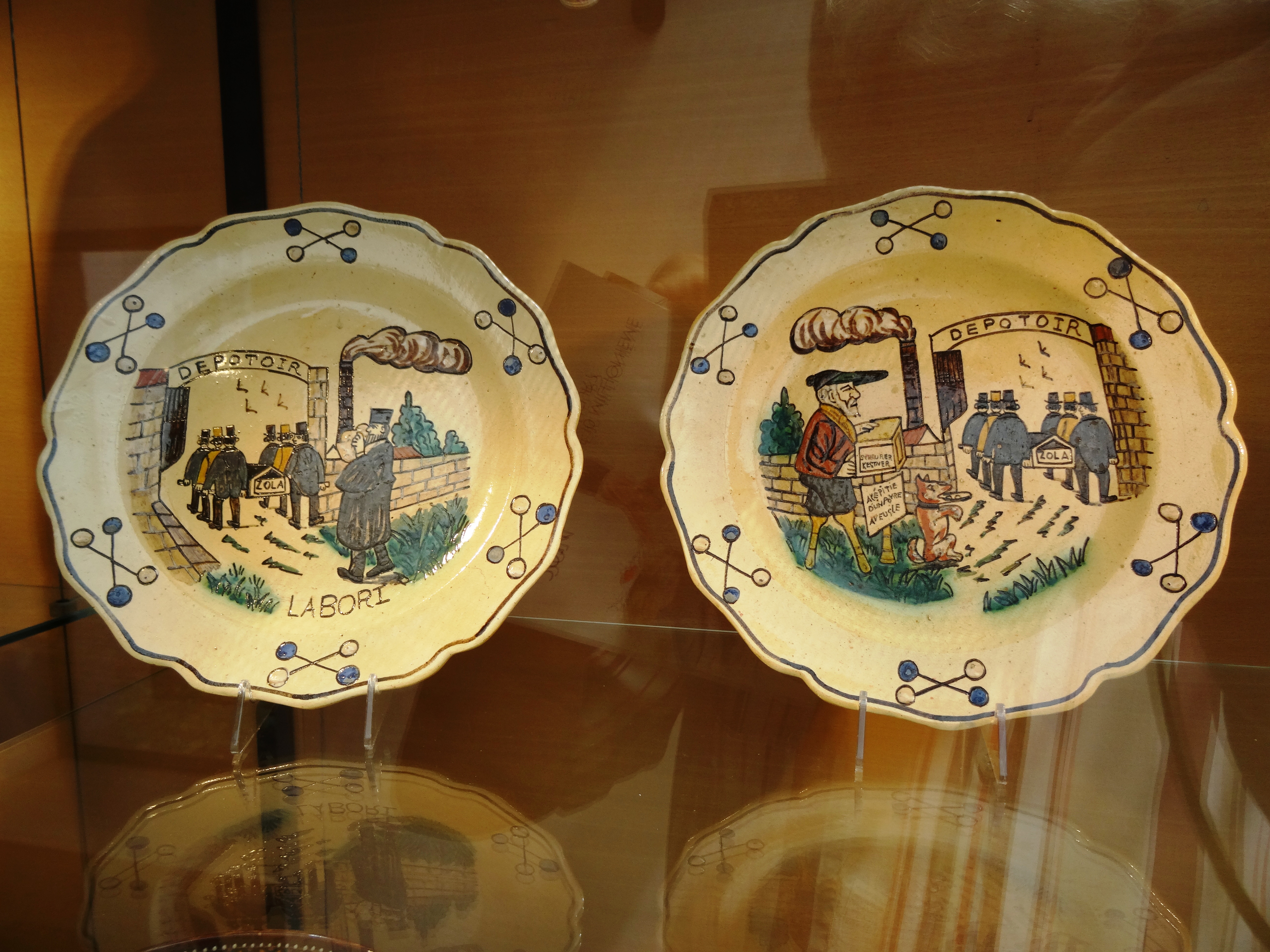
You have brought home your first piece of French pottery from Round Top. Maybe a hand-painted Quimper plate, maybe a blue and white platter you could not leave behind. Now comes the fun part: figuring out where it lives.
Here is how French homeowners actually decorate with this stuff. Not a staged magazine shoot, not a museum display. The real, lived-in approach that makes these old pieces look like they have always been there.
The Wall of Plates
A wall of plates is one of the most effective ways to use antique pottery in a home. As one French homeowner puts it, hanging plates is a very effective way to bring life to an empty surface. An empty kitchen wall, a hallway above a console, the space over a doorway. Any flat expanse that feels a little dead benefits from a grouping of plates.
The same homeowner has an entire wall of 18th-century Moustiers plates in her kitchen. Her rule: I would be far too nervous to actually use them for food. I simply add to the collection whenever I find one. That is the approach. You do not need every plate on the wall day one. You build it slowly, piece by piece, over months or years. Each one is a little memory of the show or shop where you found it.
How to Group Them
Two approaches work well:
- By region or style: all Quimper together, all blue and white Rouen-style together. This gives a unified look and lets you appreciate the details of a single tradition.
- By color palette: mix regions but keep a tight color story. All blue and white. Or all warm yellows and oranges. Or a cobalt and cream scheme.
The mistake most people make is hanging too few plates too far apart. A good plate wall wants density. Five or seven plates close together read as a collection. Three plates spread wide read as afterthoughts.
The Chopping Board Vignette
Here is a small trick that works beautifully. Lay an antique wooden chopping board on a countertop, sideboard, or marble island. Arrange a few smaller pottery pieces on top of it. A small bowl, a creamer, a few small plates stacked loosely.
The reason it works: the warmth of the wood softens the coolness of the marble and creates a lovely base to gather objects together. Wood underneath pottery is a fundamental French kitchen move. It also quietly says these objects belong to each other even when they are from completely different places and times.
Terre de Fer for Actual Use
Terre de fer is the French term for ironstone, the heavy earthenware cousin of faience. Pieces with blue or red transfer motifs are common and much more durable than hand-painted faience. These are the ones you can actually eat off of without panicking.
Mixing terre de fer with faience on a plate wall or in a stack works because they are the same material family. Both are earthenware. Both have that slight weight and matte quality. One is for display, the other for everyday. Together they feel like one collection. Our ironstone series goes deeper on terre de fer if you want the full story.
Put Beautiful Everyday Things on Display
The French kitchen approach comes down to one idea: stop hiding the beautiful objects you use every day. Copper pans hung on a rack. Brass strainers on a hook. Linen towels folded on an open shelf. A ceramic water jug on the counter next to the sink. A wooden bread board leaned against the backsplash.
This is the tableau approach. The kitchen becomes a composed still life that happens to also be functional. Your French pottery fits into this naturally. A single tureen on an open shelf. A pitcher filled with wildflowers on the table. A stack of plates, lid askew, visible through a glass cabinet.
You do not need everything to match. In fact, the charm depends on it not matching. A rug from North Africa under the table. A vintage Provencal curtain at the window. An old Moustiers plate above the stove. The mix is the point.
High and Low, Mixed
The fastest way to make expensive antiques look stuffy is to put them only with other expensive antiques. The fastest way to make them look at home is to mix them with humble things.
A $400 antique soup tureen on a shelf with a $20 wooden spoon jar. A hand-painted faience plate hung next to a framed kid's drawing. A 19th century French pitcher holding grocery-store peonies. This is how real French houses look. Nothing is too precious to live with.
The Patience Rule
If there is one piece of advice worth writing down, it is this, again from the French homeowner: I much prefer waiting for the right object or the right idea rather than rushing into decisions that have not had time to settle.
This is the best shopping mindset for Round Top. Do not force a purchase because you are there and you are tired and you want to feel like you accomplished something. Walk past the piece twice. Come back on day two. If it is still there and you still cannot stop thinking about it, buy it. If it sold, something better was waiting.
Good collections are built on wanting, not acquiring. The wait is part of the pleasure.
What to Look For Next Time You Shop
When you walk Round Top, train your eye for a few specific things:
- Blue and white, any era, any region. This is the easiest through-line for a collection.
- That soft-edged hand-painted look, the telltale sign of tin glaze and metallic oxide paint.
- Heavy earthenware pieces, anything that feels substantial for its size.
- Terre de fer with transferware patterns in blue or red for everyday pieces.
- Small, affordable pieces you can add to a wall or a shelf, not just one statement buy.
Even a single plate on a wall tells the whole story. The king, the melted silver, the Italian potters, the regional workshops, the centuries of women setting tables and hanging pottery. All of it lives in one hand-painted piece of earthenware that is now yours.
The Full Series
This wraps the French farmhouse pottery series. Catch up on the earlier posts in this series plus our ironstone and flow blue guides for a complete picture of the blue and white pottery traditions you will meet at Round Top. Planning your next trip? Start with the Round Top Finder map and our list of venues to build your route.
Never Miss a Show
Get show dates, insider guides, and featured vendors delivered to your inbox. Monthly, never spammy.
Not ready to subscribe? Grab the free printable cheat sheet — no email required.