How to Start a Flow Blue Collection (Without Going Broke)
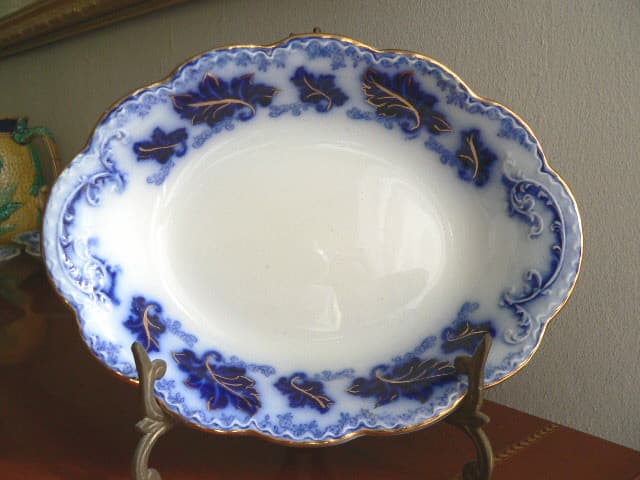
Flow blue is one of the best antiques to start collecting right now. It's still affordable on the entry end, it has a distinct look that photographs beautifully, and there's enough variety that you can spend years building a collection without ever getting bored.
If you've been circling flow blue at Round Top and wondering how to actually start, here's the roadmap.
Why Flow Blue Is a Great First Collection
A few things make flow blue especially welcoming to new collectors:
- Broad price range. You can find decent plates in the $35 to $60 range, which means you can start without a big budget.
- Instantly recognizable. Once you know the look, you can spot it from across a tent.
- Huge pattern variety. Four main style categories, hundreds of named patterns, and a century of production to explore.
- It pairs with everything. White ironstone, linen, wood, wicker, modern tables. Flow blue slots into almost any aesthetic.
Pick a Lane (But Keep It Loose)
The collectors who have the most fun tend to pick a focus. Not a rigid rule, just a direction. A few options:
Pick a Style Category
- Romantic Scenery: patterns like Watau, Nonpareil, Italian Scenery. Pastoral landscapes, often with bridges and cottages.
- Oriental: early patterns like Scinde, Amoy, Cashmere, Kabul. Temples, pagodas, Asian landscapes.
- Floral: Argyle, Lonsdale, Blue Danube, La Belle. Victorian floral scenes, widely available.
- Brushstroke: Cashmere, Aster and Grape, Tulip and Sprig. Loose painterly designs with a handmade feel.
Pick a Single Pattern
Some collectors pick one pattern, like La Belle or Blue Danube, and try to build a full set over time. This is harder but incredibly rewarding, and it gives you a clear reason to hunt at every show.
Pick by Piece Type
Others collect only serving pieces, or only pitchers, or only sugar bowls. It narrows the field and makes each find feel like an event.
The Ironstone Connection
If you've been reading our ironstone series, here's a fun discovery. A lot of flow blue is already sitting on an ironstone body. The heavy, substantial feel of early flow blue (1820s-1860s especially) comes from that ironstone base.
That means if you already collect ironstone, you're further along than you think. Display them together, mix flow blue plates into a stack of white ironstone, set a flow blue covered tureen next to an ironstone pitcher. They come from the same Staffordshire tradition, and they look like they belong together because they actually do.
What to Buy First
Start affordable. Plates, saucers, and small bowls are the most common pieces, which means they're also the cheapest. A handful of plates in a pattern you love gets you going without much risk.
Covered pieces like tureens, teapots, and sugar bowls are the showstoppers, and they hold more value (see our value guide for why). But they're also fragile and pricier, so most collectors work up to those over time.
A sensible first-year collection might look like:
- Three to five plates in one pattern or style
- One small serving piece (butter dish, creamer, or open vegetable)
- One statement piece (a covered tureen or pitcher) when the right one shows up at the right price
How to Care for Flow Blue
These are antiques. Most pieces you'll buy are between 100 and 200 years old. Treat them accordingly.
- Never put flow blue in the dishwasher. The heat and the detergent will damage the glaze.
- Hand wash with warm water and mild soap using a soft cloth. Not abrasive pads.
- Rinse with cool water. Not cold, not hot. Big temperature changes can crack old china.
- Stack carefully. Put a soft cloth or a paper towel between pieces when storing so the rims don't chip against each other.
If you're worried about using it on the table, don't be. The older pieces have survived worse, and a piece you actually use will bring you more joy than one that lives behind glass.
Where to Shop
Round Top is, predictably, one of the best places in the country to build a flow blue collection. Dozens of dealers bring it every season, and the comparison-shopping across fields means you can learn the market fast. Start with the show map and hit at least three venues per trip.
Beyond Round Top, good sources include:
- Antique malls (slower but easier to browse)
- Estate sales (unpredictable but occasionally incredible)
- eBay (mostly for pattern research, but real deals exist)
One Practical Tip That Will Save You
Photograph the back of every piece you consider. The stamp has the pattern name, often the maker, and sometimes the country of origin. That photo becomes your research file. You can look patterns up that night, check recent sales, and come back the next day knowing whether to buy.
Why It Belongs in Your Home
The dreamy cobalt bleeding into white is timeless. It warms up a cool room, cools down a warm one, and reads as elegant without feeling stiff. It pairs beautifully with ironstone, vintage linens, natural wood, and fresh flowers.
Start with one piece you love. Don't overthink it. Flow blue collectors say it all the time: memories over money. The piece you'll cherish most is the one you found at a show, carried back to the car, and set on your own table.
One more thing worth knowing before you shop: Round Top divides into two fundamentally different experiences — curated venues where dealers have done the editing, and open hunt fields where the prices are lower and the finding is the fun. The Show or The Hunt will help you decide which venues to prioritize for this category.
Ready to start hunting? Catch up on the full ironstone series for the companion antique, or browse more field guides on the Round Top Finder blog. See you in the fields.
Never Miss a Show
Get show dates, insider guides, and featured vendors delivered to your inbox. Monthly, never spammy.
Not ready to subscribe? Grab the free printable cheat sheet — no email required.