Living in Round Top: What It's Actually Like Year-Round
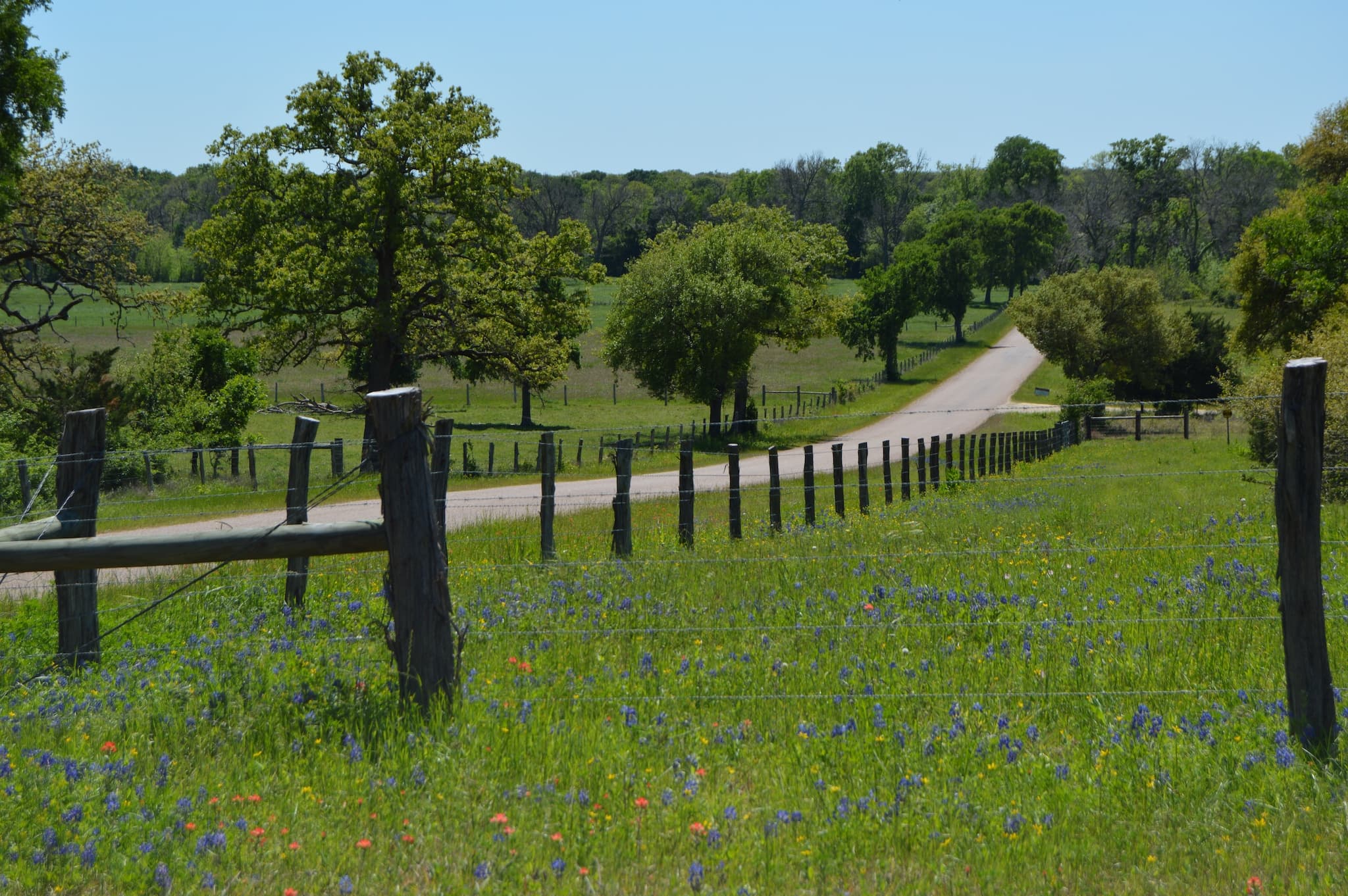
"Quintessential Small Town -- But Then It's Not at All"
Amy Sykes of the Junk Gypsies said it best: "Round Top is the kind of quintessential small town, but then it's not at all. It's really a different type of country. As far as being in the country, there's so many -- the culture and the arts and the pubs and the food."
That contradiction is the entire experience of living in Round Top. You are in a community of 90 people -- the smallest incorporated town in Texas -- with one blinking stoplight, gravel roads, and a post office that probably closes before you finish your afternoon coffee. And yet, within walking distance, you can eat at nationally recognized restaurants, attend world-class concerts, browse curated galleries, and bump into interior designers from New York who flew in for the weekend.
It is an unlikely place. That is what makes it magnetic.
The Year-Round Calendar
People who have never visited between shows assume Round Top goes dormant. It does not. The calendar has filled in to a degree that would have been unimaginable a decade ago.
The Antique Shows remain the headline events. The spring, fall, and winter shows draw over 100,000 visitors each across two-to-three-week runs. A smaller winter show rounds out the year.
But the rest of the calendar is increasingly full:
- Festival Hill Concerts -- The 200-acre Festival Hill campus hosts classical performances, educational series, and community events throughout the year. Founded by world-class pianist James Dick, the concert hall is a genuine architectural treasure -- real wood, extraordinary acoustics, the kind of venue you cannot believe exists in a town this small.
- Fourth of July Parade -- Exactly what you picture. Small-town patriotic charm at its finest.
- Round Top Film Festival -- Independent cinema in the Texas countryside.
- Christmas Parade and Holiday Events -- The town dresses up beautifully for the season.
- Wine Walk -- A community wine-tasting stroll through town.
- Art and Gallery Openings -- The year-round galleries host regular events that draw collectors and enthusiasts.
The point is that Round Top is no longer a place that wakes up three times a year. It is a place with a genuine cultural heartbeat, even when the show tents are folded and stored.
The Dining Scene (Population: 90, Restaurants: Remarkable)
This is the part that shocks people. A town of 90 residents has no business having a dining scene this good. And yet.
Royers Round Top Cafe has been the anchor for over 30 years. Started by Bud Royer and now run by his son JB and daughter-in-law Jamie Lynn, it is famous for pie -- Texas Trash, Junk Berry, Shannon's Lemon Blueberry -- and for sophisticated comfort food that goes far beyond what the roadside exterior suggests. The beef tenderloin with mushroom red wine cream sauce on mashed potatoes is a destination meal. As one visitor put it: "We're out in the middle of nowhere, but we still like to eat good food."
Lulu's Italian is the upscale option -- a candlelit Italian restaurant with a beautiful bar attached. It is the kind of place you dress up for, and the fact that it exists in a town with a population under 100 tells you everything about who is living and visiting here.
Boonin Company serves what regulars call the best kale salad they have ever eaten, which is a sentence nobody expected to write about a town in Fayette County.
The Garden Company, Mill Street Cafe, Merritt Meat Co. (fantastic barbecue in Hinkle Square), and Round Top Coffee Shop Coffee (cold brew and nitro in a log cabin) round out the options. On any given weekend, you can eat as well in Round Top as you can in the Heights or South Congress -- just with better parking and a slower pace.
The Year-Round Business Community
Between shows, Round Top is not a ghost town. More than 50 shops and galleries operate year-round along the Highway 237 corridor and in Hinkle Square. The Junk Gypsies' Gypsyville store is a permanent anchor, drawing fans of the brand and HGTV show every weekend.
The business mix is eclectic: antiques and vintage, obviously, but also contemporary home goods, clothing boutiques, artisan workshops, and galleries. The Round Top Mercantile -- the hardware store, grocery store, feed store, and sandwich shop all in one -- is the kind of place that only exists in a town that takes self-sufficiency seriously.
Each year, a few more dealers who used to only show up for the big events make the leap to permanent storefronts. The year-round retail footprint is growing steadily, which means more reasons for visitors to come outside of show windows, which means more foot traffic for everyone. It is a virtuous cycle that makes the town more livable for residents and more viable for business owners.
The Essentials: Schools, Groceries, Medical
Here is where the honest assessment matters. Round Top does not have an H-E-B. It does not have a hospital. It does not have a public school system.
For everyday essentials, residents rely on nearby towns:
- Brenham (about 20 minutes) has H-E-B, Walmart, a hospital, multiple medical offices, and good public schools. It is the practical hub for Round Top residents. It also happens to be the home of Blue Bell Ice Cream, which has its own appeal.
- La Grange (about 20 minutes in the other direction) offers similar amenities -- grocery stores, medical care, and schools.
- Burton and Carmine are smaller nearby communities that add to the rural network.
Families with school-age children typically enroll in the Burton ISD or Brenham school systems. It is a commute, but one that rural Texans are accustomed to.
For everyday life, this works. You plan your grocery runs, you batch your errands into town trips, and you keep a well-stocked pantry. It is not convenient in the Amazon Prime same-day-delivery sense. But convenience was never why people moved to Round Top.
The Community
Round Top's roots run deep. The community dates to the 1830s German settlements. The town got its name because the home used as the post office had a tall, round cupola on top. In traditional German fashion, the center of town is marked by a small town hall building.
That heritage is not just historical footnote -- it lives in the architecture, the land stewardship, and the community values. Round Top has always attracted independent-minded people: artists, makers, dealers, musicians, ranchers. The kind of people who value craft, quiet, and self-reliance.
In recent years, that community has expanded to include designers, entrepreneurs, and creative professionals drawn by the lifestyle and the proximity to Houston and Austin. The mix is unusual and specific: people who could live anywhere and chose a town with a blinking stoplight and a world-class concert hall.
Two Metros, Ninety Minutes
The geographic math is Round Top's superpower. You are 90 minutes from Houston. You are 90 minutes from Austin. That makes Round Top weekend-commutable from either city.
Some residents work remotely full-time from Round Top. Others split their week -- a few days in the city, the rest on the land. Couples with one partner still commuting to an office can make it work without it feeling like a sacrifice.
This dual-metro access also means that the social and cultural resources of two major cities are within reach. You can see a show at the Houston Symphony or catch a live music night on Sixth Street in Austin and be back on your porch in Round Top before midnight.
The Show-Week Reality
Three times a year, your town of 90 becomes a temporary city of tens of thousands. Highway 237 backs up. Every restaurant has a wait. Strangers park along your fence line. The energy is electric and exhausting in equal measure.
Long-time residents have different strategies. Some embrace it fully -- opening their homes as rentals, volunteering at venues, eating at Royers every night while the crowds are in town. Others retreat -- they stock up on groceries before the show starts, hunker down on their property, and emerge when the last vendor trailer pulls out.
Most fall somewhere in between. They appreciate the economic vitality the shows bring, enjoy the energy in measured doses, and look forward to the quiet that follows. As one resident described it: "Your town becomes a city three times a year. Some love it, some retreat. Most have made their peace with it."
The Honest Truth
Living in Round Top means accepting certain trade-offs. There is no Starbucks. Cell service is spotty at best -- multiple carriers struggle, and there are genuine dead zones on back roads. Your internet options may be limited. The roads flood. Fire ant mounds appear overnight in your yard. The nearest emergency room is a 20-minute drive.
During show week, your property taxes are working harder than you are, but the rest of the year, the quiet can be profound. Some people find it peaceful. Others find it isolating. You need to know which camp you fall into before signing a deed.
But for the people who belong here -- and they know who they are -- the trade-offs are not trade-offs at all. The spotty cell service means you actually disconnect. The lack of chain restaurants means the places that exist have soul. The small population means you know the person pouring your coffee and the one repairing your fence.
Round Top is not for everyone. It is for a very specific kind of person: someone who values authenticity over convenience, community over anonymity, and a wood-burning fire over a gas-log insert.
Come See for Yourself
The best way to understand Round Top is to spend time here -- not just during show week, but on a quiet Tuesday in October or a sleepy Sunday in June. Walk Hinkle Square when the only sound is a screen door closing. Sit on the porch at Royers and eat pie for breakfast. Drive the back roads with the windows down.
Use Round Top Finder to explore the town, find restaurants and shops that are open year-round, and check the show calendar for your first visit. If you feel what the people who live here feel -- that slow-down, deep-breath, I-could-stay-forever pull -- then you already know the answer.
Round Top does not recruit. It just waits for the right people to find it.
Full Guide
Round Top Life
Year-round community, real estate, and local life in Round Top.
Never Miss a Show
Get show dates, insider guides, and featured vendors delivered to your inbox. Monthly, never spammy.
Not ready to subscribe? Grab the free printable cheat sheet — no email required.