What Is Flow Blue China? The Accidental Pattern America Loved
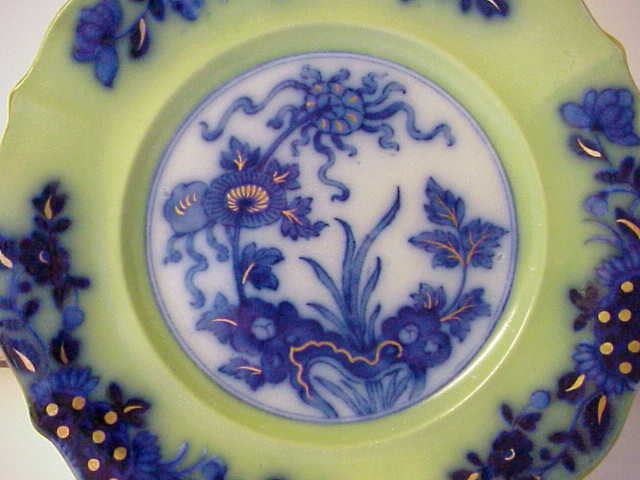
There's a piece of china that English manufacturers actually tried to throw away. They called it second or third tier, factory seconds, not fit for proper households. Then they shipped it across the Atlantic, and America fell hard for it.
That's the strange, wonderful story of flow blue.
The Accident That Started It All
Flow blue is a style of porcelain and white earthenware that showed up by accident in England in the 1820s. Potters in the Staffordshire region were producing transferware, a method where a design gets engraved onto a copper plate, coated in warmed cobalt oxide, pressed onto moist tissue paper, and then transferred onto the pottery. The piece is set in water, the tissue floats away, and the pattern stays behind.
Somewhere along the way, the chemical glaze got over-applied. When the piece went into the kiln, a chemical vapor caused the cobalt blue to run, bleeding past the crisp edges of the design. The crisp lines softened. The blue seeped into the white. It looked blurry, dreamy, a little out of focus.
English manufacturers hated it. To their eyes, the blurred edges meant the piece had failed quality control. These were the rejects.
America Had Other Ideas
Those rejects got shipped to the United States, and something unexpected happened. Americans loved the look. The soft, flowing cobalt felt elegant, almost painterly, and because manufacturers priced these factory seconds low, the working middle class could finally afford china that looked like a step up.
Flow blue became one of the most popular dishware styles in America. What England tossed, America set on the Sunday table.
Why It Feels So Heavy
Pick up a piece of real early flow blue and you'll notice something right away. It has weight to it. Most of the early flow blue produced between the 1820s and 1860s has a heavy ironstone base, which is why it feels so substantial in your hand.
If you've been reading our ironstone series, this will click fast. Flow blue and ironstone are cousins. A lot of flow blue sits on an ironstone body, which is part of why pieces from this era survived in such good shape. Ironstone was built to last.
The Look You Can Spot Across a Tent
Once you know what to look for, flow blue stands out fast at a show. The defining quality is that bleed: cobalt blue softening into the white surface, with the pattern still visible but hazy around the edges, like a photograph taken just slightly out of focus.
Early pieces go heavy on the blue, sometimes covering almost the whole plate. Later pieces, produced in the 1880s through the early 1900s, let more of the white show through, with added beading and embossing around the rim. Both eras have their fans.
Why It Still Shows Up Everywhere
English production mostly stopped in the early 1900s. American potteries picked up the slack and kept making flow blue through World War I and into the 1940s. Collecting interest dropped during the war years, then came roaring back in the 1960s, and it has never really gone away.
That's why you still see it at Round Top. Covered tureens stacked on a vendor's shelf. A pitcher and basin catching morning light at Marburger. A single plate leaning against a crate at Warrenton. The dreamy blue on white reads as both formal and relaxed, which is why designers keep pulling it back into modern rooms.
What This Series Will Cover
Flow blue is one of the easier antiques to fall in love with at Round Top, and also one of the easier ones to overpay for if you don't know what you're looking at. Over the next three posts, we'll cover:
- How to date a piece using the stamp on the back and the style on the front
- What flow blue is actually worth and the price ranges to expect
- How to start a collection without going broke or getting burned
If you already collect ironstone, you may be further along on flow blue than you think. Some of the pieces sitting in your cabinet right now might have the same Staffordshire roots.
Keep an eye out this season. Flow blue turns up in almost every major field at Round Top, from Blue Hills to Marburger to the smaller yards off 237. Once you start spotting that soft cobalt bleed, you'll see it everywhere.
Next up: how to date a flow blue piece by reading the stamp and the style. Until then, browse more antique guides on the Round Top Finder blog or start planning your shopping route on the show map.
Never Miss a Show
Get show dates, insider guides, and featured vendors delivered to your inbox. Monthly, never spammy.
Not ready to subscribe? Grab the free printable cheat sheet — no email required.