Vintage Cameras and Photography Equipment at Round Top
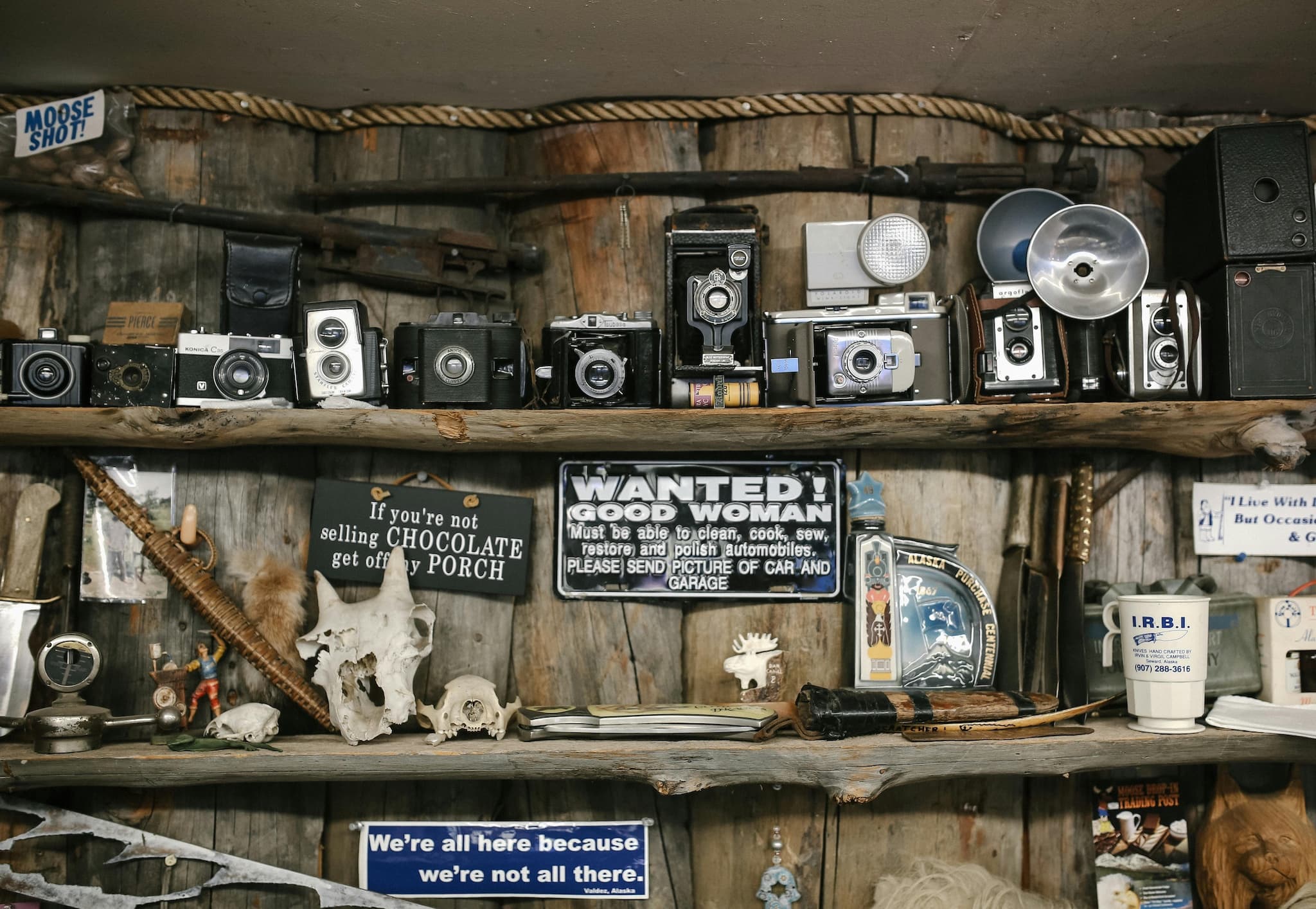
A Leica IIIf with a 50mm Summitar lens was sitting on a dealer's table at Warrenton last fall for $385. The dealer didn't know what he had. The same kit, with the same lens, sold the next month on a major camera auction site for $1,150. That's the gap between "old camera at an antique show" and "vintage camera at a camera show," and it's why people with even basic knowledge of vintage cameras find incredible deals at Round Top.
The camera market at Round Top is uneven. Some dealers know exactly what they have and price accordingly. Others are pricing by appearance — pretty cameras cost more than functional cameras, regardless of value. If you know the difference, the show is a goldmine.
What Shows Up at Round Top
Vintage cameras are scattered across Round Top, with no single venue specializing. You'll find them at:
- Warrenton field shows — the bulk of "estate find" cameras
- Marburger Farm — occasionally serious camera dealers
- Blue Hills — usually 1-2 dealers with European cameras
- Big Red Barn — mixed, often very fair prices
- The Compound — decorative cameras for display
The major categories you'll see:
- 35mm rangefinders (Leica, Contax, Canon, Nikon)
- 35mm SLRs (Nikon F, Canon F-1, Pentax, Minolta)
- Medium format TLRs (Rolleiflex, Yashica, Mamiya)
- Medium format SLRs (Hasselblad, Mamiya, Pentax 6x7)
- Folding cameras (Kodak, Voigtländer, Zeiss)
- Box cameras (Brownie, Argus, Ansco)
- Early color cameras (Argus C3, Polaroid SX-70)
- Polaroid instant cameras (SX-70, 600 series, Spectra)
- Subminiature cameras (Minox, Yashica Atoron)
Price Ranges in 2026
These are real Round Top prices from the last two shows:
Leica rangefinders:
- Leica IIIa, IIIc (1930s-40s): $350-$900
- Leica IIIf, IIIg (1950s): $400-$1,200
- Leica M3, M2 (1950s-60s): $1,200-$3,500
- Leica M4, M6 (1970s-90s): $1,800-$3,800
- Leica lenses (Summitar, Summicron, etc.): $250-$2,500
Rolleiflex TLRs:
- Rolleicord (entry-level): $200-$500
- Rolleiflex Standard, Automat: $400-$900
- Rolleiflex 2.8F (the holy grail): $1,200-$2,800
Hasselblad:
- 500 C/M with 80mm lens: $800-$1,800
- 500 C/M kits with multiple lenses: $1,500-$3,500
- Hasselblad lenses: $250-$1,500 each
Nikon SLRs:
- Nikon F (1959 original): $250-$650
- Nikon F2, F3: $200-$500
- Nikon FM, FE, FM2: $150-$400
- Nikkor lenses: $80-$600
Canon SLRs:
- Canon F-1 (1971-76): $200-$500
- Canon AE-1, A-1: $80-$250
- FD lenses: $40-$300
Folding cameras:
- Common Kodak folding cameras: $40-$150
- Voigtländer Bessa: $150-$400
- Zeiss Super Ikonta: $250-$700
Brownie and box cameras:
- Common Brownies: $20-$80
- Early Brownie No. 1 or 2: $80-$200
Polaroid:
- SX-70 (folding, leather): $150-$400
- 600 series (1980s): $30-$80
- Spectra (1990s): $25-$60
- Land cameras (1960s-70s): $40-$150
Argus C3:
- Standard examples: $40-$100
- With original case and accessories: $100-$200
The Three Tests Before You Buy
Even at a Round Top tent without electricity, you can evaluate a film camera.
Test 1: The shutter.
- For SLRs and rangefinders: dry-fire at every shutter speed. Listen for sound differences between 1/30 and 1/500. If they sound the same, the shutter is sticky.
- For leaf shutter cameras (folding, TLR): listen for a crisp, even "click." A sluggish or uneven sound means service needed.
- For Polaroid: pull the shutter release. The shutter should snap, not hiss or stick.
Test 2: The lens.
- Hold the lens to a light source. Look for:
- Haze (a fog in the glass) — varies in fixability
- Fungus (thread-like patterns) — sometimes cleanable, sometimes destructive
- Scratches — minor scratches don't affect images; major scratches do
- Separation (rainbow patterns at the edges) — usually unfixable
Test 3: Mechanical operation.
- Wind the film advance. Smooth, no skipping or grinding.
- Open the back and check the film transport. Both spools should turn freely.
- For meters (built-in light meters): if there's a battery, see if the meter responds. A non-functional meter doesn't kill the camera but drops value.
- Check focus: rotate the focus ring. Should turn smoothly with no looseness or grinding.
For Leica specifically: the rangefinder should be bright and the two patches should align cleanly when focused. A dim or misaligned rangefinder needs service ($150-$400).
Reproductions and Fakes
The vintage camera market has surprisingly few outright fakes, but there are some traps.
Fake Leicas: Soviet-era FED and Zorki cameras are sometimes rebadged with Leica markings and sold as real Leicas. Real Leicas have specific serial number formats and certain construction details. Verify serial numbers against a reference list (camera-wiki.org has these).
"Russian Leica" cameras (FED, Zorki): these are real cameras, just not Leicas. They're worth $40-$150, not $500+. A Zorki sold as a Leica is a $50 camera at a $500 price tag.
Replated and reskinned cameras: modern leather covers and replated chrome can make a worn camera look mint. The price should reflect the original condition, not the restoration.
Reproduction Hasselblad lenses: Eastern European companies have made copies of certain Hasselblad lenses. These work but aren't worth Hasselblad prices.
The "Display Only" Camera Market
A huge fraction of cameras at Round Top sell as decoration, not as functional cameras. Buyers want them on shelves, on coffee tables, in photo studios as props.
For display, you're paying for:
- Visual appeal (chrome, leather, brand recognition)
- Iconic models (Leica M3, Rolleiflex, Polaroid SX-70)
- Color and texture
You're not paying for:
- Working mechanics
- Lens condition
- Film advance function
If you're buying for display only, you can often get a non-working but beautiful camera at 50-70% of working-camera prices. Just be honest with the dealer: "I'm buying this to display, so it doesn't have to work."
Polaroid: The Right Time to Buy
The Polaroid market is hot right now thanks to Polaroid Originals (now Polaroid B.V.) keeping the format alive. New film is available for SX-70, 600 series, and Spectra cameras.
At Round Top, you'll find:
- SX-70 folding cameras: the most sought-after, $150-$400 for working examples
- 600 series (1980s): $30-$80, plentiful
- Spectra (1990s): $25-$60, also plentiful
- Land cameras (1960s-70s pack film): $40-$150, but pack film is no longer made
The SX-70 is a beautiful object — leather and brushed steel, folds flat, looks great on a shelf. Even non-working SX-70s sell for $80-$200 as display pieces.
Lenses Worth More Than Cameras
Sometimes the lens is worth more than the body. Walk Round Top with this knowledge:
Leica lenses:
- Pre-war Elmar 50mm: $400-$1,200
- Summitar 50mm f/2: $250-$600
- Summicron 50mm (any era): $500-$2,500
- Summilux 50mm: $1,000-$3,000+
Nikon lenses:
- 50mm f/1.2 AI-S: $300-$700
- Any Noct-Nikkor 58mm f/1.2: $1,500-$4,000+
- 105mm f/2.5: $150-$300
Hasselblad lenses:
- 80mm Planar: $250-$500
- 150mm Sonnar: $250-$500
- 250mm Sonnar: $300-$700
If you see a Leica or Hasselblad lens detached and "thrown in" with a camera at a low price, that's potentially the deal of the show.
What I'd Actually Buy
If I had $500 to spend at Round Top on vintage cameras, here's how I'd allocate:
For collecting: A Rolleiflex Automat or Rolleicord in working condition. $250-$400. Beautiful objects, easy to use, holds value.
For shooting: A Nikon FM2 with a 50mm f/1.4 AI-S. Total $250-$350. The best mechanical 35mm camera ever made for the price.
For display: A Polaroid SX-70 (even non-working). $120-$200. Conversation piece.
For investment: Skip Round Top. Buy investment-grade Leicas from dedicated camera dealers or auctions.
Negotiating on Cameras
Camera dealers at Round Top fall into two groups: the ones who know what they have and the ones who don't.
Dealers who know: prices are firm-ish, maybe 10% off. You're paying market value or slightly below.
Dealers who don't know: prices are random. A working Hasselblad might be priced at $400 next to a broken Polaroid at $200. Pay the price, don't negotiate too aggressively — the deal is already incredible.
A general approach: ask "What's your best price?" and let them volunteer a number. Then decide if it's worth countering.
What to Skip
Don't buy cameras with obvious deal-breakers unless they're priced as parts/display only:
- Stuck shutter that won't fire at all
- Heavy fungus in the lens
- Broken rangefinder (Leica/Contax)
- Missing back or major parts
- Severe corrosion
These cost more to repair than to replace.
Where to Get Repairs Done
If you buy a vintage camera that needs service, you have specialized options:
- DAG Camera Repair (Don Goldberg) — Leica specialist, the gold standard
- Sherry Krauter — Leica specialist, also excellent
- Karl Bryan — Hasselblad specialist
- YYZ Repair — TLR and folder specialist
- Various local Texas camera shops — basic service for SLRs
Expect 2-4 month turnaround on most service work.
A Final Note
Round Top isn't the world's best place to buy vintage cameras — that's still dedicated camera shows and auctions. But it's an excellent place to find sleeper deals from non-specialist dealers, and the volume of cameras is high enough that something interesting always shows up.
Walk every Warrenton booth. Look at the boxes of "old cameras" no one's bothering to display. That's where the Leica IIIf with a Summitar lens sits, priced at $385, waiting for someone who knows what they're looking at.
Use the vendors page on Round Top Finder to find dealers who specialize in cameras and photography equipment, and save your finds with favorites.
Never Miss a Show
Get show dates, insider guides, and featured vendors delivered to your inbox. Monthly, never spammy.
Not ready to subscribe? Grab the free printable cheat sheet — no email required.